


You’ve got the space—maybe a shopping center corridor, an entertainment complex, or a standalone building. You know families are looking for things to do. But will a play attraction actually pull in enough visitors to justify the investment? The short answer: yes, when the indoor play equipment is chosen with commercial intent. It’s not just about colorful foam and trampolines. It’s about creating a destination that extends dwell time, generates multiple revenue streams, and keeps guests coming back. This guide breaks down the mechanics of how a well-designed play venue becomes a traffic driver—from layout psychology and equipment mix to safety credentials and customization that builds brand loyalty.
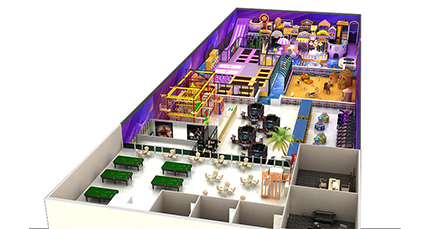
A play space isn’t just a collection of activities—it’s a journey. When families enter, they need a visual anchor that excites children and reassures parents. High-energy zones like trampolines and climbing walls draw immediate attention, while quieter soft-play areas give younger kids a safe introduction. The layout should guide visitors naturally through the space, encouraging them to explore every zone. Longer dwell time translates directly into higher spending—not just on admission, but on food, beverages, party bookings, and merchandise. The key is to eliminate dead ends and create loops that keep guests moving and engaged.
Not every venue needs the same formula. A mall location with high foot traffic might prioritize visibility and quick-turn attractions like open jump and slides. A standalone FEC needs a broader mix to justify a full-day visit.
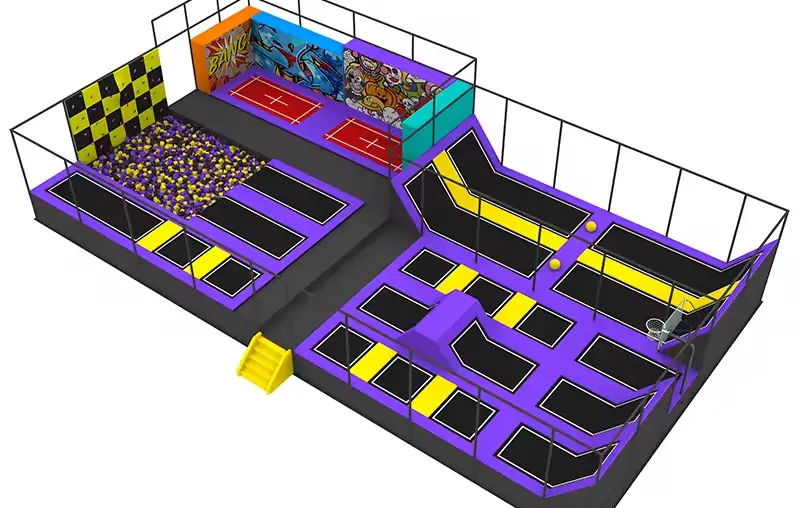
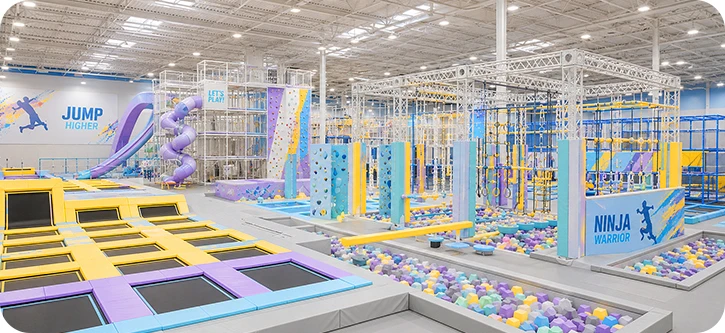
Trampoline systems – the core draw for school-age kids and teens, offering high-energy exercise.
Dodgeball and basketball courts – encourage group participation and competitive play, ideal for parties.
Ninja obstacle courses – appeal to older children and adults, adding a fitness element.
Soft play and ball pits – cater to toddlers and younger children, keeping families with multiple age groups.
Climbing walls and rope structures – add variety and challenge.
The right combination maximizes usage across all age groups, ensuring you capture the entire family market rather than just one segment.
Commercial play structures face relentless use—hundreds of visitors daily, seven days a week. Equipment built to residential standards will fail within months. Look for specs that match industrial-grade demands:
Steel frames: Q235B galvanized, 48mm diameter, 2.0mm thickness – rust-resistant and rigid.
Springs: zinc-plated, 8cm length, 5mm wire diameter, tested to 100,000+ cycles.
Jumping mats: PP webbing, 80mm width, UV-resistant, tear strength >2000N.
Padding: 50mm EPE foam with 0.9mm flame-retardant PVC covering, EN71-3 certified.
These aren’t just numbers—they’re the difference between a structure that stays safe and solid for years and one that develops weak spots after six months.
Safety failures close venues. Insurance claims, negative reviews, and regulatory fines can wipe out profits. That’s why certification isn’t optional—it’s a business necessity. Equipment should meet ASTM F1918 (US), EN1176 (Europe), CSA Z614 (Canada), and AS3533 (Australia). These standards cover everything from fall impact absorption to entrapment prevention.
Beyond the paperwork, look for tangible safety features:
Enclosure nets at 1.8m height with 45mm mesh and tensile strength >800N.
Rounded corners and covered fasteners.
Fire-retardant materials throughout.
Clear signage and staff training resources.
When insurers see certified equipment, they’re more willing to underwrite your operation at reasonable rates. That’s a direct impact on your bottom line.
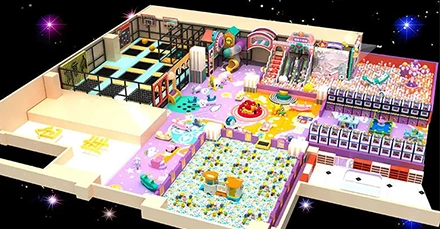
A generic play area blends into the background. A themed, branded space becomes a landmark. Custom colors, logo integration, and immersive themes—space, jungle, neon—create a memorable experience that visitors share on social media. That organic marketing drives free word-of-mouth promotion and repeat visits.
Customization also allows you to adapt the layout to your specific footprint, wrapping around columns or fitting into irregular spaces. It signals attention to detail and quality, justifying higher ticket prices and premium party packages.
For a large custom installation (100+ sqm), expect $150–$400 per square meter. The investment covers design, manufacturing, shipping, and installation drawings. While the upfront cost is significant, the revenue potential is compelling:
| Attraction Type | Typical Revenue Streams | ROI Impact |
|---|---|---|
| Open jump zone | Admission fees, punch cards | High throughput, low marginal cost |
| Dodgeball court | Court rentals, tournament fees | Group bookings boost yield |
| Ninja course | Special events, fitness classes | Attracts adults and teens |
| Soft play area | Daycare-style hourly rates | Extends dwell time for families |
| Party rooms | Package sales (food+play) | Highest margin per visit |
How do I know which attractions will perform best in my location?
Analyze your local demographics—age distribution, family income, and competing attractions. Suppliers often provide market analysis and revenue projections based on similar projects. A good partner will help you tailor the mix to your catchment area.
What’s included in the warranty and after-sales support?
Look for a 5-year warranty on steel frames and 2 years on soft parts, with lifetime spare parts availability. Installation guidance—remote or on-site—should be part of the package, along with training materials for your staff.
Can I combine trampolines with soft play and climbing walls?
Absolutely. Integrated play systems create a seamless experience that appeals to all age groups. The key is to design transitions that maintain safety and flow—for example, placing soft play adjacent to the toddler area and ninja course near the teen zone.
How long does it take from design to delivery?
Typically 4–8 weeks for standard custom projects, depending on complexity and shipping distance. Request a detailed production timeline before committing.
A well-executed indoor play venue isn’t just an expense—it’s a strategic asset that drives foot traffic, increases dwell time, and builds customer loyalty. With the right equipment, safety certifications, and customization, your space can become the go-to destination for families in your area. Request a customized layout plan and quote → —our team can provide 3D renderings and revenue projections tailored to your market.
Ningke Playground has delivered over 500 successful commercial projects across 50+ countries. The Popular Indoor Trampoline Park and Gym at the Shopping Center for Children and Teenagers is a prime example of their turnkey capability—covering design, fabrication, installation guidance, and lifetime technical support. All equipment meets ASTM/EN1176 standards, backed by a 5-year steel frame warranty and 2-year soft parts coverage. Factory-direct pricing saves up to 30% compared to Western brands, and free 3D design is available within 5 days. Let’s build something that drives real results.
 15+ years crafting play
 SGS | EN1176 | ASTM
 40+ countries


 English
 Español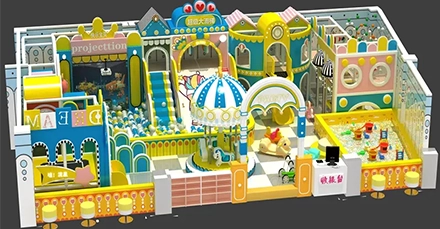
-1507.webp)
.jpg)
.jpg)
.jpg)