


When adding a playground to a backyard, community, school, or commercial space, a central question always arises: Is it more cost-effective to purchase a complete prefabricated playset or to build one from scratch? The answer isn't a simple yes or no; it involves multiple considerations like initial cost, long-term value, safety, and labor. This article will compare "Buying" versus "Building" across four key dimensions—Cost, Safety, Installation, and Warranty & Maintenance—to help you make an informed decision.
Purchasing a pre-designed, pre-manufactured complete playset is the most straightforward route.
Pros: Clear, upfront pricing. A single payment typically covers the main equipment, hardware, and basic installation instructions, making budgeting predictable with few surprise expenses.
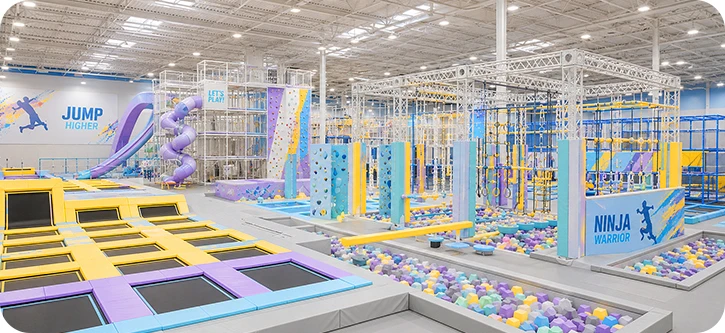
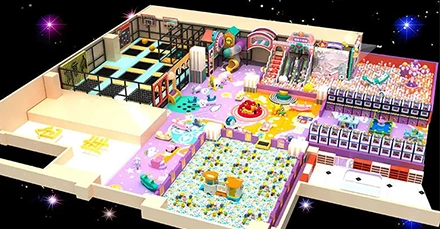
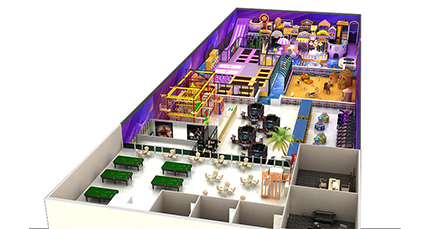
Cons: The initial cash outlay can be high, especially for premium or large sets. However, this includes professional design and engineering costs. For clients seeking professional design and good value, reputable suppliers like Ningke are worth considering. Ningke offers a wide range of indoor playground equipment, and their prefabricated sets often provide competitive package prices due to scale, without compromising on quality.
Pros: This is one of the biggest advantages of buying. Equipment from reputable commercial-grade suppliers (like Ningke) is typically designed and tested to meet or exceed national and international safety standards (e.g., ASTM, EN1176). Materials are tested, and designs consider pinch points, age-appropriateness, fall protection, and structural integrity.
Cons: Safety is contingent on purchasing from a compliant supplier. Always request safety certification documents.
Pros: Saves time and effort. Kits come with detailed step-by-step instructions, and many suppliers offer professional paid installation services to ensure correct and safe assembly. For complex large combinations, professional installation is almost essential.
Cons: If opting for self-installation, significant time and labor are still required, with strict adherence to instructions necessary.
Pros: Usually comes with a clear manufacturer's warranty (e.g., on structure, parts), allowing for free repair or replacement of defective components during the coverage period. Suppliers can also provide professional maintenance advice and access to replacement parts.
Cons: The responsibility for regular inspection and maintenance (tightening bolts, checking for wear) remains with the owner, but maintaining standardized parts is generally easier.
Designing and building from scratch means creating from raw materials like lumber and hardware.
Pros: The apparent initial cost for materials might be lower, especially for very simple structures. You have the flexibility to shop around for each component.
Cons: Hidden costs are very high. It's easy to underestimate the cost of lumber, specialized hardware, tools (rental or purchase), and safety surfacing (e.g., safety mats). Any design error or construction mistake leads to material waste and extra expense. Furthermore, your time cost is not factored in.
Pros: None. This is the most significant risk of DIY.
Cons: A Major Challenge. Non-professional designs are prone to serious safety hazards: insufficient structural strength, improper guardrail spacing, protruding or pinch points, use of unsuitable materials (e.g., toxic preservatives). You assume full personal liability for the safety of the final product, which carries substantial legal risk, especially in public or multi-user settings.
Pros: Complete customization. Allows for a unique design tailored to a specific space and imagination.
Cons: Extremely time-consuming. Requires intermediate to advanced carpentry, construction skills, and engineering sense. Detailed plans, precise measurements, and complex assembly are needed. For inexperienced builders, the project may be abandoned or the result may be subpar.
Pros: No formal warranty.
Cons: All issues and repairs must be handled independently. You must source replacement parts and diagnose and fix structural problems yourself. Long-term maintenance can be more complicated due to non-standard construction.
From a total cost of ownership perspective, for a sturdy, safe, and fully-featured playground, purchasing a prefabricated set is generally the "cheaper" option—where "cheaper" encompasses overall cost, risk, and time.
Buying offers Predictability: predictable costs, guaranteed safety, controlled installation time, and long-term warranty support. It exchanges money for professionalism, safety, and peace of mind. For instance, opting for Ningke's indoor playground equipment means investing not just in a product, but in professional design, safety compliance, and supply chain support.
Building (DIY) is fraught with Uncertainty. It may save on some material costs but is offset by high time investment, significant safety risks, potential rework waste, and zero warranty. It is only recommended for highly skilled individuals with ample time who are willing to assume all risks for very basic structures.
The final decision should be based on: your budget, skill level, available time, and the priority you place on safety standards. For the vast majority of homes, communities, and commercial venues, investing in a prefabricated playground from a reliable manufacturer is the more economical, safer, and wiser choice.
Q: What is the most expensive part of buying a prefab playground?
A: Usually the large main structures (like composite slide towers, large climbing nets) and professional-grade safety surfacing (e.g., rubber tiles, EPDM pour-in-place). Installation service is also a significant cost.
Q: If I have a very unique design idea, is DIY my only choice?
A: Not necessarily. Many professional suppliers, including Ningke, offer customized indoor playground equipment solutions. You can discuss your ideas with them; they can provide feasible custom designs based on engineering and safety principles, blending creativity with safety—a far more reliable approach than DIY experimentation.
Q: What does maintaining a playground involve?
A: Regular maintenance is crucial, whether bought or built. This includes: monthly inspection and tightening of all fasteners; checking wood for splinters, rot, or cracks; inspecting plastic and metal for cracks, wear, or rust; ensuring safety surfacing is intact and has adequate depth; and keeping the area clean and free of debris.
Q: How can I ensure the playground equipment I buy is truly safe?
A: First, choose a reputable brand or supplier. Second, proactively request to see the product's safety test certification documents (e.g., ASTM F1487 or EN1176). Finally, ensure the supplier provides clear user manuals, installation guides, and maintenance instructions.
 15+ years crafting play
 SGS | EN1176 | ASTM
 40+ countries


 English
 Español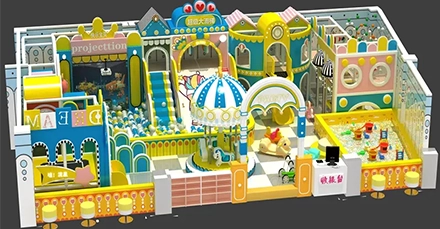
-1507.webp)
.jpg)
.jpg)
.jpg)