


A mall operator in Southeast Asia had a problem. The soft play area on the second floor was designed for younger children only, and it worked for ages 2‑6. But the 8‑to‑12 age group walked past the padded blocks without looking twice. Adding a separate arcade zone solved nothing. What the mall needed was a single indoor play equipment system that could serve both age groups in the same footprint, without making toddlers feel unsafe and without boring the older kids.
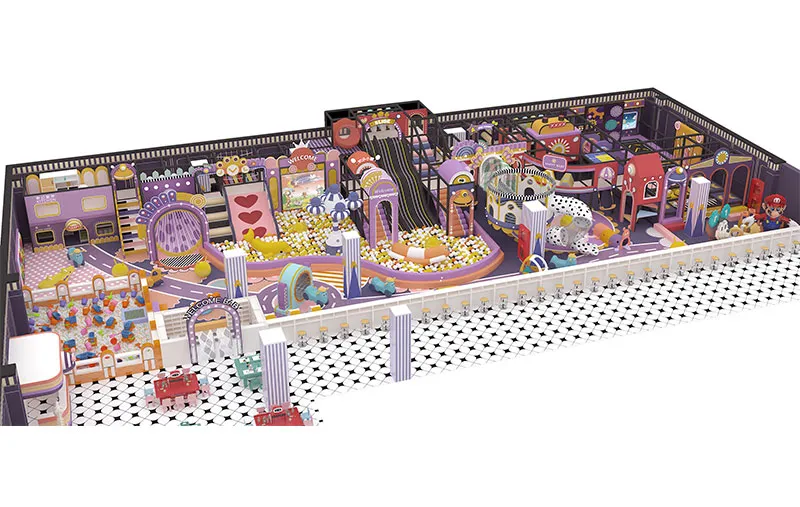
The solution was the TQB‑C‑001 Macaron Theme Naughty Castle Play Equipment from Ningke Playground‑a multi‑level structured play system built around the signature low‑saturation pastel color palette. The equipment uses a galvanized steel frame, PP jumping mats for trampoline zones, EVA foam padding with PVC leather wrapping, and PE protective netting for fall zones. The multilevel layout naturally creates age stratification, with soft play and ball pits on the lower level for ages 2‑5, and climbing nets, overhead obstacle courses, and high slides on the upper level for ages 6‑12.
This article walks through why the indoor play equipment system material specifications—galvanized frame thickness (≥1.5 mm wall), EVA foam density for impact attenuation, and PE netting mesh spacing—determine whether a naughty castle stays in service for five years or becomes a maintenance headache after one, what the EN1176, ASTM, and TUV certifications actually cover for insurance purposes, and how the macaron color palette influences visitor dwell time by creating a visually calm environment that parents appreciate.
The structural frame of a commercial naughty castle is hidden from view but takes all the load. Children jumping on trampolines, climbing on rope nets, and swinging on hanging elements apply dynamic forces that can exceed 2‑3 times their body weight. A frame made from uncoated mild steel will rust within a year in a humid indoor environment. Rust compromises weld integrity, and a failed weld means a platform collapse.
The TQB‑C‑001 uses a hot‑galvanized steel pipe frame (external diameter ≥48 mm, wall thickness ≥1.5 mm). The galvanization process coats the steel with a zinc layer that provides sacrificial protection. Ningke’s production process includes 11 stages: cutting, welding, polishing, sand blasting, powder coating, drying, packing, trampoline mat sewing, foam cutting for padding, padding cover sewing, and padding packing.
Sand blasting before powder coating removes weld slag and creates a surface profile that helps the powder coat adhere. Powder coating adds a second corrosion barrier and provides the color‑matching capability that allows the frame to blend into the macaron theme (pastel pink, lavender, mint, or baby blue). The multi‑stage finish means that even if the powder coat is scratched during installation, the underlying galvanized layer continues to protect the steel. Rust stains on a play structure are not just cosmetic, they can cause children's clothing to snag on rough edges.
The padded surfaces where children crawl, stand, and fall are the second most critical component. A soft play platform is built as a multi‑layer sandwich: a plywood or composite board core for structural rigidity, a layer of EVA foam (high‑density ethylene‑vinyl acetate) for impact absorption, and a 0.45 mm thick PVC leather covering that provides a wipe‑clean, non‑abrasive, flame‑retardant surface.
Impact attenuation is critical for injury prevention. The EVA foam layer compresses under load, reducing the deceleration force when a child falls from a platform. The correct foam density provides a balance between cushioning and rebound. Foam that is too soft compresses fully and does not recover, creating permanent depressions that become tripping hazards. Foam that is too firm does not absorb enough impact force, increasing the risk of bone fractures.
The PVC cover uses welded seams rather than stitched seams. Stitching creates needle holes that weaken the material and provide entry points for moisture and bacteria. Heat‑welded seams create a bond that is as strong as the PVC itself and are easier to sanitize. The fire code compliance (flame‑retardant rating) is documented in the test reports, which also cover the absence of toxic heavy metals in the PVC and EVA materials. EVA foam has a fine, closed cell structure that provides comfortable and even cushioning, high resilience for effective impact absorption, and waterproofing so it does not absorb liquid.
The playground industry has known for years that bright, high‑saturation primary colors—primary red, bright yellow, pure blue—stimulate children’s visual systems and attract attention. Mall owners love them because they catch the eye of children walking past. Parents see the same colors and associate them with cheap carnival attractions and long lines.
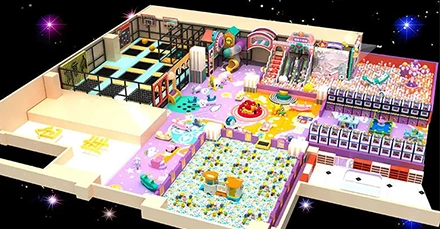
The macaron color palette reverses that association. The TQB‑C‑001 uses low‑saturation pastel tones: soft pink, lavender, powder blue, and mint green. These colors appear in nature (cherry blossoms, hydrangeas) and in high‑end retail interior design. Parents see the pastel palette and interpret the playground as clean, safe, and aesthetically curated. The equipment’s visual appeal becomes a selling point for parents, not just a sensory attractor for children.
The macaron theme also photographs well, which generates free social media marketing. Parents posting photos of their children in a pastel‑colored playground tag the location, and other parents see an environment that looks pleasant rather than overstimulating.
Safety certifications create a baseline for quality and are a non‑negotiable requirement for commercial insurance coverage. Any indoor play equipment (主词加粗第3次) installed in a publicly accessible location must meet either EN1176 (European standard) or ASTM (US standard). Equipment that lacks these certifications is the first line of claim denial after an incident.
The TQB‑C‑001 carries EN1176 certification (Europe’s primary playground safety standard, covering structural integrity, entrapment hazards, material durability, and fall zone surfacing across its 11‑part series), ASTM F1918 (the US standard specifically for soft contained play equipment, covering guardrail heights, opening sizes, and impact attenuation), and TUV (third‑party verification by Germany’s leading testing authority).
For a shopping mall operator, the certification stack means the play center satisfies property insurance liability requirements without requiring expensive endorsements. Complete test reports are available for landlord approval and local fire department code compliance.
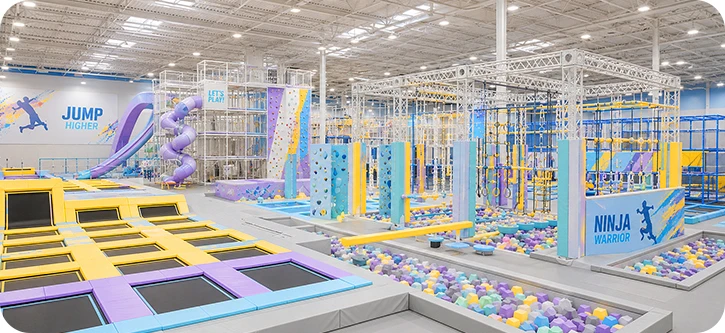
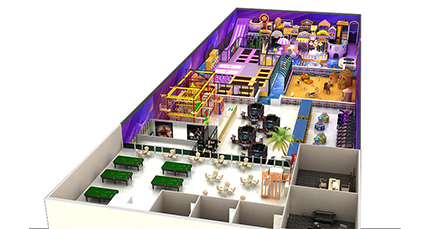
A naughty castle that serves ages 2‑12 must solve a supervision problem. Parents cannot be on the upper level with their toddler while also watching an older child on the lower level. The TQB‑C‑001 solves this with a design that places all toddler‑friendly activities (ball pit, low slide, soft play blocks, mini trampoline) on the ground floor. The upper level (accessible only by climbing nets or ladder) contains activities that require more advanced physical skills and are used by older children who are less likely to need direct adult assistance.
The PE protective netting on the upper level encloses the climbing paths, preventing falls while allowing parents to maintain visual contact from the ground. The netting mesh spacing is sized to EN1176 specifications to prevent head entrapment. The results are immediate: children naturally migrate to their age‑appropriate zone without a rulebook, and parents can stand in the central café seating area and watch all zones at once.
| Age Group | Primary Zone | Equipment Type | Key Safety Feature |
|---|---|---|---|
| 2‑5 | Ground floor | Ball pit, low slide, trampoline, soft play blocks | Full soft padding, ground‑level exit |
| 4‑8 | Ground floor + lower climbing | Rope net bridges, small climbing frames | PE netting, EVA landing pads |
| 6‑12 | Upper level | High slides, rope tunnels, ninja obstacle course, climbing frames | EN1176‑compliant guardrails, padded fall zones |
The PE (polyethylene) protective netting that encloses the upper level is the component that sees the most direct wear. Children grab it for balance, hang on it during climbing, and sometimes chew on it. UV exposure from mall lighting and skylights accelerates degradation.
Ningke specifies PE netting that meets EN1176 criteria for tensile strength, knot security, and mesh spacing. The recommended inspection schedule is monthly for a high‑traffic mall location. Inspectors check for stretched mesh openings (EN1176 specifies maximum opening size to prevent head entrapment), frayed knots (where a child’s finger could be caught), and UV discoloration that indicates material fatigue.
The maintenance standard is straightforward. If a single strand breaks, the theater knot often prevents further unraveling, but the netting should be scheduled for replacement within the next quarter. If two adjacent strands break or a seam separates, the affected panel should be replaced immediately. Spare netting sections are available from Ningke, and replacement can be done with zip ties rated for outdoor use.
A naughty castle arrives in labeled crates. The frame comes as knocked‑down components, the padding is rolled, and the netting is bundled. A supplier that provides only a drawing set and no installation assistance creates the potential for misaligned frames, uneven platforms, and tensioned netting that is either too loose or too tight. Ningke offers installation and commissioning as part of the turnkey contract.
Foam compresses, PVC tears, and netting frays. The operator should verify that the supplier stocks replacement EVA foam pads, PVC covers, spring sets, and netting panels for the specific model. Ningke provides spare parts on demand through its after‑sales support system, which includes regular maintenance services, technical support, and spare parts availability.
The mall’s property manager will ask for the EN1176 and ASTM test reports before the play center opens. The supplier should provide these reports in advance, not after the equipment has been ordered. The TUV certificate number and test date should be listed on the quote. Ningke makes all test reports available to its distributors and documentation.
A family entertainment center with an established brand palette may need non‑standard colors. The macaron theme of the TQB‑C‑001 can be adapted to match an existing brand. Ningke R&D supports color customization at the powder coating stage, allowing the frame and padding to be produced in custom pastel hues while maintaining the same material specifications.
A basic warranty covers defects in materials and workmanship. A commercial‑grade playground warranty also covers structural integrity for a defined period, typically 12‑24 months. The operator should confirm the warranty period and what it excludes. Ningke’s after‑sales support includes spare parts availability and technical guidance.
[Image: Close-up of the PE protective netting on the TQB‑C‑001 Macaron Theme Naughty Castle Play Equipment, showing the symmetrical mesh openings, secure knots, and UV‑stable polyethylene material]
Ningke Playground (Ningke Amusement Equipment Co., Ltd.) manufactures indoor and outdoor playground equipment, trampoline parks, and soft play systems. The company operates with advanced precision injection molding and welding equipment, an annual production capacity of millions of units, and a multi‑stage quality assurance process from raw material inspection to final product testing.
The TQB‑C‑001 is part of the macaron series, designed for 100‑500㎡ medium‑sized venues (shopping mall play areas, family entertainment centers, early childhood education centers, and indoor family cafes). The equipment is customizable in color, size, and feature modules to fit the exact floor plan of the venue. Ningke’s “one‑stop service” covers site planning, design, production, installation, and after‑sales support, including staff training on safety procedures and equipment maintenance.
For an indoor play equipment system that keeps toddlers and pre‑teens engaged in the same 300‑500㎡ footprint, the TQB‑C‑001 Macaron Theme Naughty Castle Play Equipment delivers EVA foam padding, galvanized frame, PE protective netting, multilevel layout, and EN1176/ASTM/TUV safety certifications.
[Request a quote from Ningke Playground]
Contact Ningke with your available floor space (in square meters), target age range, and preferred color palette to receive a TQB‑C‑001 layout drawing and certification package.
 15+ years crafting play
 SGS | EN1176 | ASTM
 40+ countries


 English
 Español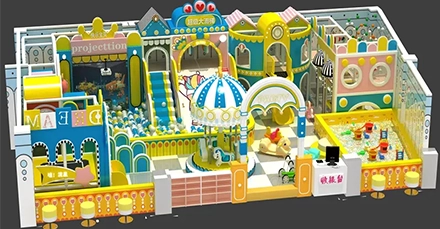
-1507.webp)
.jpg)
.jpg)
.jpg)