


The trampoline park industry has exploded globally, transforming from a niche activity into a mainstream destination for family fun, fitness enthusiasts, and corporate events. For entrepreneurs, it represents a dynamic and potentially lucrative venture. This guide provides a detailed roadmap for launching a successful trampoline park, covering everything from initial conception to daily operations.
The global trampoline park industry is experiencing robust growth, with the market size projected to reach $5.4 billion by 2034 at a CAGR of 16.89%. This boom is driven by three core factors that make it a standout investment opportunity:
1. Rising Demand for Active Entertainment: Over 50% of urban families now prioritize "fun with purpose" activities, and trampolining fits perfectly—burning 400-600 calories per hour while being low-impact. It appeals to a broad demographic: kids aged 5-12 (primary users), teens seeking social spaces, and adults joining trampoline fitness classes.
2. Diversified Revenue Streams: Daily admissions typically account for 60-70% of revenue, but high-margin add-ons boost profitability: birthday parties, corporate team-building packages, private coaching, and branded merchandise. Many parks also partner with local schools for physical education programs, securing recurring income.
3. Scalable Business Model: Entrepreneurs can start with a 200-300 sq.m "micro-park" with a 117k−204k investment, then expand to 500+ sq.m by adding ninja warrior courses or VR trampoline zones as demand grows. This flexibility lowers entry barriers while allowing for long-term growth.
Startup costs vary significantly based on size, location, market, and the quality/quantity of attractions. Here’s a general breakdown:
Small Facility: Initial investment typically ranges from $300,000 to $600,000.
Medium-Standard Facility: Investment usually falls between $700,000 and $1.5 million.
Large Entertainment Center: Costs can exceed $2 million.
Key Cost Components Include:
Real Estate & Build-Out: Lease deposits, architectural design, construction, flooring, lighting, ventilation, and themed decor.
Equipment & Installation: The single largest expense, covering trampolines, foam pits, play structures, and safety padding.
Licensing, Permits & Insurance: Essential for operation. Liability insurance is a major recurring cost due to the activity's nature.
Pre-Opening & Working Capital: Covers marketing campaigns, initial staff training, inventory, and operating expenses for the first 3-6 months.
A solid business plan is your blueprint for success. It should detail:
1. Executive Summary & Company Description: Outline your vision, mission, and the park's unique value proposition.
2. In-Depth Market Analysis: Research local demographics, identify direct/indirect competitors, and assess demand gaps.
3. Marketing & Sales Strategy: Define your target audience, pricing model, and promotional tactics (digital marketing, community partnerships, grand opening events).
4. Detailed Financial Projections:
Revenue Forecasts: Model income from all streams (admissions, parties, F&B).
Expense Budgets: Itemize fixed (rent, salaries) and variable (utilities, supplies) costs.
Break-even Analysis & Funding Request: Project your path to profitability and specify required investment.
5. Operations & Management Plan: Describe day-to-day operations, management structure, and critical safety protocols.
Quality equipment is non-negotiable for customer safety, enjoyment, and long-term durability. Essential attractions include:
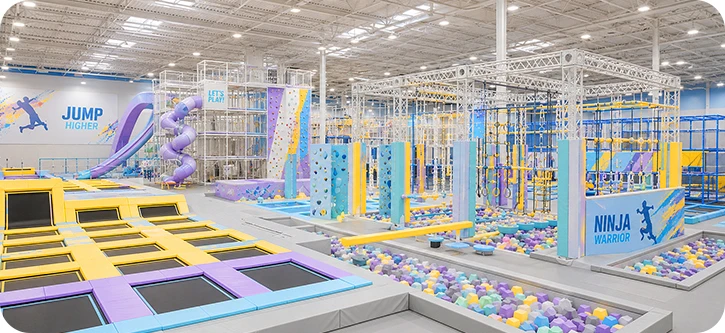
Main Court Areas: Connected wall-to-wall trampolines, basketball slam dunk lanes, and dodgeball courts.
Challenge & Adventure Zones: Foam pits, ninja warrior obstacle courses, rock climbing features, and battle beams.
Dedicated Kids' Zone: Age-appropriate soft play structures, mini-trampolines, and slides.
Critical Safety Infrastructure: High-impact padding, perimeter netting, anti-slip flooring, and comprehensive surveillance systems.
Introducing a Reliable Supplier: Ningke Trampoline Park Equipment
When sourcing equipment, partnering with an experienced manufacturer like Ningke can provide significant advantages:
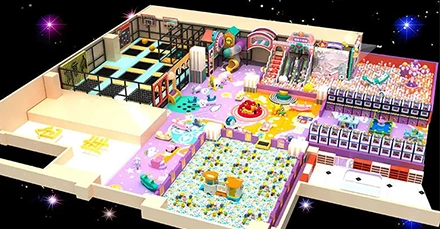
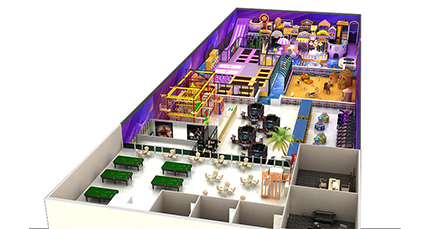
Customized Layout Design: They offer modular and flexible design solutions to maximize your unique floor plan and theme.
Premium Safety Engineering: Ningke equipment is manufactured with reinforced heavy-duty frames, high-performance jump beds, and superior padding that meets or exceeds international safety standards (ASTM, TÜV).
Themed Aesthetic Packages: They provide creative thematic packaging options to help your park stand out with a distinctive and immersive atmosphere.
Turn-Key Project Support: From initial concept and 3D rendering to manufacturing, installation, and staff training, Ningke offers end-to-end service to streamline your opening process.
Key Roles to Hire: General Manager, Operations Supervisor, Court Monitors/Safety Marshals, Front Desk Associates, Party Hosts, Maintenance Technicians, and Café Staff.
Comprehensive Training Focus:
Rigorous Safety Protocol: All staff, especially monitors, must be certified in CPR/First Aid and thoroughly trained in emergency procedures, rule enforcement, and proactive hazard spotting.
Exceptional Guest Service: Training should emphasize engagement, conflict resolution, and upsell techniques for parties and memberships.
Activity Leadership: Staff should be skilled in organizing and leading games, competitions, and group events to enhance the guest experience.
Opening a trampoline park is a high-potential venture in the booming active entertainment industry, but success hinges on three critical pillars: 1. a data-driven business plan that addresses local demand and competitive gaps, 2. uncompromising safety (via certified equipment like Ningke and trained staff), and 3. operational efficiency to maximize revenue streams. By leveraging Ningke’s cost-effective, customizable solutions and implementing strategic marketing and pricing, entrepreneurs can tap into the $5.4B global market and build a sustainable business that resonates with families, teens, and fitness enthusiasts alike. With the right planning, a trampoline park can become a community hub and a profitable long-term investment.
Q1. What licenses are required to open a trampoline park?
A: Core licenses: Business registration, health permit (for snack bars), fire safety certification, and equipment inspection certificate (per local regulations). For international markets, CE certification (EN 1176-10) is mandatory for Europe, and ASTM F2970 for the US. Processing time: 3–6 months.
Q2. How long is the investment payback period?
A: Typically 18–36 months for small-scale parks and 24–36 months for mid-scale parks. Factors like location (urban areas with high foot traffic), marketing efforts, and group booking volume can shorten this to 12–24 months.
Q3. How to ensure safety and reduce liability risks?
A: Use certified equipment (e.g., Ningke’s ASTM/CE-compliant products), enforce strict capacity limits, require grip socks, train staff in first aid, and purchase comprehensive liability insurance. Post visible safety rules and install CCTV cameras to monitor zones.
Q4. What makes Ningke’s equipment unique compared to other brands?
A: Ningke stands out for global safety compliance, modular customization (adaptable to venue size and theme), long warranties (reducing maintenance costs), and end-to-end support (from design to after-sales). Their equipment is also designed for durability, with rust-resistant frames and tear-proof mats.
 15+ years crafting play
 SGS | EN1176 | ASTM
 40+ countries


 English
 Español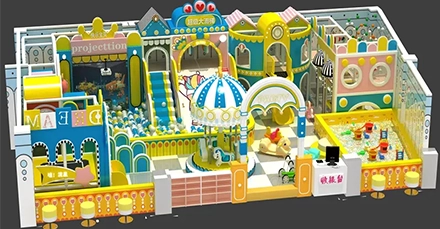
-1507.webp)
.jpg)
.jpg)
.jpg)